0070 Of Wizards and Golems

0070 Of Wizards and Golems MP3
(audio player below article)

Of Wizards and Golems

Once upon a time there was a beautiful city. The city was surrounded on all sides by lush, fertile farm lands, and thick dark forests. The city had a bustling commerce center, and right through the middle was a crystal clear river, the delight of the inhabitants. But the city had a problem. Right in the middle of the city there was a tall tower, and at the very top of the tower lived an evil old wizard. The wizard wanted to gain control of the city, but he knew that if the city inhabitants knew he was doing so they would try to kill him. But the old wizard was very crafty, and so he created four golems.

He named the golems Medius, Arminus, Politicus, and Corpratas. He sent Medius out to the public first, and Medius had the job of convincing the people that they needed these golems to be happy. Medius did so by spreading lies that the city’s peaceful neighbor was planning on attacking the city, and stealing all the wealth, and enslaving the citizens. The townspeople became frightened, and demanded that something be done. Medius then introduced Politicus. Politicus promised to protect the people by controlling Arminus, who had a big sword. Arminus, Politicus promised, would be used only to defend the city. Of course, to defend the city Arminus needed some of the townspeople’s gold. So the people, frightened by the lies of Medius and Politicus gave a tithe of their gold willingly. Medius then began going around to the townspeople, and convincing them that the old ways of doing things were inefficient, and backwards. Medius pointed to other cities that had technological advancements, and said that the city needed those advancements, or they would lose their place among the world stage.

While Medius was spreading these lies, Politicus took some of the gold that they had taken from the townspeople and gave it to Corpratas. Corpratas used the gold to develop products to make the townspeople’s lives easier, and yet make them more reliant on the golems. Corpratas made food that tastes far better than anything the townspeople had ever tasted, and was addictive, and made the people sick. By this time, the people were clamoring for these products, because Medius had convinced them that they were necessary. So the townspeople gave Corpratas what little gold they had not given to Politicus, in return for these wonderful and terrible new products.

Corpratas and Politcus were great friends, and so they shared this gold back and forth, one giving the gold they had taken from the townspeople to the other, and the other giving gold in return. When the townspeople began to grow tired of giving gold to Politcus, Arminus marched through the town, and took the gold with the threat of his big sword. Medius followed after and told what terrible things would happen if Politcus didn’t get the gold.

At this point in the story you might be inclined to think that the evil old wizard was after the townspeople’s gold. But the evil wizard was not interested in such petty things. You see, the wizard had put a lot of his power into the golems, and he wanted them to get him even more power. He was a devilishly intelligent wizard, and he knew that people would get tired of his golems after awhile, and he would lose his grip on the people. So one day, when the people were getting frustrated with being stolen from, and were skeptical of the threat of outside war, Medius began telling a new tale. Medius told of how Politicus was being irresponsible with the people’s money, and how the power had gone to Politcus’ head. The townspeople, fueled by Medius, found Politcus, and dismantled the golem. However, because they had already been brainwashed into believing they needed a Politcus, they fashioned a new golem, one that Medius and Arminus promised them could be trusted to do only what it promised, and no more.

Far away, in the top room of the highest tower of the city, the old wizard smiled, and watched in the mirror as he grew a little younger, and a little stronger. For you see, he had designed the golems with a very clever spell inside of them, a spell that was triggered when they were destroyed and replaced. This spell gave power and youth back to the wizard, who gained more control over the golems, and over the people of the city.

For generations this cycle went on, until the wizard was a young wizard, handsome and fierce. The townspeople grew tired of this cycle, and defeated in the hope that the golems would ever return to their original purpose. The golems grew more and more bold, and began taking more gold, driving the city into financial despair. The golems began to do terrible things, always hoping to push the townspeople into revolution, so their master would get stronger.

But the townspeople began to make the connection between the golems and the tower at the city’s center. They searched back through the history of the town, until they came to writings about the evil old wizard. They began to watch, and saw how powerful the wizard was. The townspeople knew they could not storm the tower, and kill the wizard, for he was much too strong, and was protected by Arminus, who had a much bigger and sharper sword now. And so, in dark alleys and small pubs, a new plan began to be hatched, one that would defy the traditional notions of what to do about the golems.

The townspeople watched as day by day the golems got stronger, and uglier. Medius was seen throughout the town, urging the people to destroy the golems, and build new ones. The people of the city planted their heels in the dirt, and clenched their jaws and ignored the terrible things that the golems were doing. They began to teach each other the forgotten skills of their ancestors, when they were not dependant on the products of Corpatas, and began telling truths, not tainted by Medius’ lies.

The Wizard in the tower began to panic, as he was getting old again, and his golems were beginning to get harder and harder to control. The golems began to crumble, looking more haggard by the day. They became more vicious, lashing out at the townspeople for no reason, hoping to provoke a response. And still the townspeople turned their heads, and continued their studies. Finally, the golems marched into the heart of the city, smashing in doors and dragging people into the streets. It was the final stand of the golems, and they were more vicious than ever before. The entire city looked upon the golems, and saw them for the evil that they were, and as one vowed to never again allow fear to let them be slaves. The golems, weakening now to the point of crumbling, fell as one, no longer able to support themselves. On the wind, a long howl could be heard from the top of the tallest tower, as the old wizard, old and feeble once again, lost his only source of power, and died.

The city decided to leave the tower intact, as a reminder to why they must never allow lies and fear to control them. The remains of the golems lay at the base of the tower still, a daily sight for the happy, peaceful town that had regained its freedom.

Ki Vick Ki

2011

Posted in Audio Articles, Bad Quaker Fun, Economics, Free Society, The Campfire | Tagged , , , , , , , | Comments Off on 0070 Of Wizards and Golems

0069 Rent-Seeking and Wealth Destruction

0069 Rent-Seeking and Wealth Destruction MP3
(audio player below article)

Rent-Seeking and Wealth Destruction
by Ben Stone

There are words and phrases used by economists that can be confusing. Bad economists can intentionally use confusing words for the purpose of deception while covering the crimes of banks and governments. For example, an economist may say something like, “We need a degree of quantitative easing to jump-start the economy and prevent price stagnation.” Or perhaps he says, “Deposit multiplication is a legitimate function of the banking system.” These statements can be compared to a charlatan spiritualist telling you that the dirty money in your bank account is preventing your long dead relative from blessing you with the wisdom of Heaven. Of course, transferring that dirty money to the spiritualist can solve the problem. So no matter the profession of the charlatan, the theft occurs and is covered by the sweet words of deceit.

That said there are good economists that can be confusing as well. Not because the economist is attempting to deceive, but because the economist is using an older more accurate word or meaning than its current more common usage. An example could be where the economist is referring to the medieval practice of denying true land ownership to the peasant class by the privileged gentry. In modern terms most people would call this ‘property tax’ but the good economist would more accurately call it ‘quitrent’. An equally confusing phrase could be ‘rent-seeking’. Twisted by today’s common vernacular, a person could think this phrase has something to do with a landlord trying to fill vacant apartments. But actually the meaning is quite different.

The simplest definition of rent-seeking is the expenditure of resources for the purpose of enriching oneself at the expense of another without adding goods or services into the economy. This is slightly different than outright theft, which simply transfers wealth from one to another. Rent-seeking actually destroys wealth while enriching one person at the expense of the other.

An example of rent-seeking could look something like this:
A crime gang moves into an area. Two representatives of the gang begin visiting the local bars and taverns. In the weeks that follow they observe the activities and patronage of the various nightspots around town. Then on a busy Saturday evening the owner of Willy’s Blues Connection, the most popular tavern in town, walks into his office to find the gang members waiting for him. They explain to the tavern owner that for a slight charge each week, they will offer their protection and assure that nothing unusual will happen to his tavern. All too clear is the implication, so the tavern owner agrees and the gang members now take a cool 1% of the gross sales at Willy’s Blues Connection.
This type of extortion is called rent-seeking because the gang invested expenses, time, and energy to investigate and set up the victim. The gang members used resources as they traveled around town familiarizing themselves with the local bars. And with time, the gang invests more resources to support the two members who maintain the gang’s income flow from Willy’s while they seek other suitable businesses to include in their protection racket.

Perhaps a simpler version of rent-seeking could look like this:
A law firm employs two staffers who spend their days surfing the internet using key word searches. Their purpose is to find small-to-medium sized businesses, blogs, and forums that are using images, sounds, or other material that may or may not be covered by so-called “intellectual property” or IP laws. The law firm will use any of several means to claim ownership of the IP and then threaten to sue the user unless a fee is paid. Since such a lawsuit can easily cost a small business a million dollars or more to defend against, they negotiate a settlement of several thousand dollars rather than fight the law firm.
This is rent-seeking because, as in the gangster example above, the law firm has to maintain the employment of the thugs and invest in the ongoing expenses of finding and obtaining the IP rights in order to collect the funds rightfully earned by others. And, like the gangsters above, the law firm adds nothing to the economy so the result is an overall loss.

In both these cases, the key element is that the gang and the law firm are a net loss to the economy as a whole. Even though the gang and the law firm are enriched, overall the result is a drain on the economy as productive dollars are wasted in the process of rent-seeking. This as opposed to a simple robbery where there is no net loss to the economy when the wealth is simply transferred from the victim to the thief.

One last example of rent-seeking:
There are two companies that raise and sell rabbits.
Linda’s Loving Bunnies is a small operation run by a 16 year old girl in her spare time. She hand raises rabbits for pet stores and has been in business 2 years, turning a net profit of $86 the first year followed by $237 the second year. She’s building a reputation with the pet stores for supplying healthy rabbits, well adjusted to handling by humans. In other words, her bunnies don’t bite. Linda, with the help of her parents, is planning to expand their business with hopes that someday it will be big enough to pay for her college education.
On the other side of the county, DEVMEAT Inc. is a meat supplier for the cat food industry. They use high intensity methods to raise rabbits for meat production and as a side; they sell their older “breeder” rabbits to the pet stores once they fall off on their production quotas. These breeder rabbits tend to be somewhat less friendly than is desired by the pet stores.
The regional sales manager at DEVMEAT notices his local sales are steadily falling each month as the pet stores prefer Linda’s Loving Bunnies to his product. For no reason whatsoever, he calls his friend at the local office of the United States Department of Agriculture (USDA) and they plan a day golfing at the local club with several company attorneys and an accountant. Later that month Linda’s Loving Bunnies is visited by a USDA inspector who finds her in violation of an obscure regulation regarding cage design. One thing leads to another and Linda and her parents are looking at a $90,000 fine for their business that has never made more than $30 in any one month.
To be fair, DEVMEAT is inspected the same day and is fined $26,000 for violations similar to those found at Linda’s. The reason the fine is so much smaller is because DEVMEAT was able to put a team on the problem and fix it on the spot, whereas Linda couldn’t afford to replace all of her cages and associated supplies within the time given by the USDA.
This is rent-seeking in the sense that DEVMEAT is willing to lose money in the short run in order to monopolize the rabbit market for the long term goal of continued domination. While at the same time, this is rent seeking on the part of the USDA since they are simply acting in the exact same role as the gangsters in the first example and the goon lawyers in the second example.

The immorality of rent-seeking should be more than obvious to the reader, but for the purpose of clarity I should explain why it violates the Zero Aggression Principle. Rent-seeking, on any level and committed by any person or persons can only function by using either aggression, the threat of aggression, or fraud upon the property of others. Without the implied threat, the tavern owner would laugh at the gang members’ request. Without the threat of the fist of the State, IP laws would be unenforceable, as they are purely a product of the State. And finally without the fist of the State the private rabbit producer would out perform the corporation on the niche level and eventually grow to threaten them on a wider scale.

This brings up the impact of rent-seeking on the economy as a whole. Each time a person or a group engages in rent-seeking they reduce the overall wealth available to all of us in two ways. First, their act of rent-seeking uses resources from the economy that they do not replace through their own production. And second, the victim of the rent-seeking will use resources in defensive ways that would otherwise be available for production and commerce. When you consider that gangs and other criminals working outside the law are limited as to the kinds of businesses they can extort, how many businesses they can extort, and how much money they can extort without killing the business, it becomes clear that the outlaw element has a minor impact on the economy. However when you consider that the State faces no limits on what kind of victims, how many victims, or the degree of extortion applied to each victim, and then you multiply that by the mind boggling numbers of State actors employed for the sole purpose of rent-seeking, the good economist is overwhelmed at the massive amount of wealth destroyed on a daily basis.

Reversing one’s thoughts, and considering the potential condition of the economy if State sponsored rent-seeking were recognized for what it is and consistently condemned by the general public in the same manner that we condemn gang sponsored extortion, a whole new world of wealth and production would pour into the economy stimulating savings, investment, innovation, and invention. Thinking of the amazing accomplishments of the market in the last 150 years and then extracting the impact of State sponsored rent-seeking during that time is enough to bring a hardened man to tears at the thought of the world that could have been.

At this point in the discussion, polite words fail me as I contemplate the evil Beast that has consumed more wealth in the last century than has existed throughout most of human history combined.

Ben Stone Ben
2011

Posted in Audio Articles, Economics, History, Property, Voluntaryism and Law, Voluntaryism and the Zero Aggression Principle | Tagged , , , , , , , , , , , , , , , , , , , , | 1 Comment

No Article for Today

Sorry folks!
No Article for Today
Technical difficulties at Bad Quaker Dot Com
Things should be back to normal tomorrow (Friday).

However, for your reading pleasure Bad Quaker Dot Com suggests this article by Wendy McElroy.
Forsaking Society for the State?
by Wendy McElroy

The wall separating state and society is crumbling. Or, rather, the state is taking a jackhammer to it in an aggressive attempt to control every aspect of productive and cooperative life.

Consider one small example. A few days ago, Secretary of Homeland Security Janet Napolitano launched the latest in a series of so-called public-service announcements that are slated to play at Walmarts across the nation. While you are standing in line to buy a carton of milk, the Orwellian Napolitano will look down upon you from a television screen and preach the virtue of turning neighbors and strangers into the authorities for the crime of “suspicious” behavior. What next? A two-minute “hate session” in the produce department?

Read the rest of Wendy’s article here

Posted in Uncategorized | Comments Off on No Article for Today

0068 PC19 Block, North, Molyneux, Ron Paul Oh My!

Episode 18 Bad Quaker Podcast
with Ben and Ki

Featured in this episode:

  • Listener email and more on milk
  • The Great Block/North Debate on education
  • The not-so-great Walter Block/Stefan Molyneux squabble
  • The great question; Keep the State alive or let it die?

Original Intro/Exit music by Grenades?!

0068 PC19 Block, North, Molyneux, Ron Paul Oh My!

Posted in All Podcasts | Tagged , , , , , , , , , | 1 Comment

0067 The Wise Kindly Judge and Lopez The Liar

0067 The Wise Kindly Judge and Lopez The Liar MP3
(audio player below)

We have a double feature today. The myth of the wise kindly judge and the story of Lopez the liar are two small articles that we have placed together on this audio file.

But it's so cute...

The original articles cane be found at these links:
The Myth of the Wise Kindly Judge
Lopez The Liar

Posted in Audio Articles, Brief Articles and Short Notes, The Campfire, Voluntaryism and Law, Voluntaryism and Social Interactions | Tagged , , , , , , , , , , , | Comments Off on 0067 The Wise Kindly Judge and Lopez The Liar

0066 The Problem With Term Limits

0066 The Problem With Term Limits MP3
(audio player below)

The Problem With Term Limits
by Ben Stone

I haven’t heard much about term limits lately, so while emotions are low and logic has a chance, I thought I would toss this out for your consideration.

Jerry and Bob were twin brothers.
Jerry inherited the Happy Day apartments from his eccentric uncle. The conditions of the inheritance stipulated that Jerry would have complete ownership of the apartments for exactly 30 years to the day. During that time he would have full ownership of the apartments and could collect as much rent as he was able, but at the end of the 30 years the apartments would become the property of the uncle’s favorite country club.
Bob inherited the Long Run apartments from the nutty uncle. The only stipulation to Bob’s inheritance was that after 30 years, if Bob chose to sell the apartments, the country club would have an opportunity to buy the Long Run apartments at the current market value as assessed by an independent auditing firm. If, on the other hand, Bob did not want to sell the Long Run apartments to the country club, he could give them to his children as an inheritance.
So what we have, no matter the titles involved, is Jerry the temporary caretaker and Bob the property owner.

Bob has short-term incentives that include making as much rent as possible, but Bob also has a long-term incentive to maintain and even improve the property so as to get the best price possible when the country club considers buying the property. So when Bob receives the rent payments from his tenants he is inclined to consider what he can do in the short term to insure the tenants stay happy and continue renting, but he will also think of how he can preserve the integrity of the property and perhaps even increase its fair market value. So not only does Bob keep the grounds clean and attractive, he has the roof inspected and begins a preventative maintenance program to fix problems before they occur.
Jerry has a different set of incentives. Jerry is inclined to get as much rent as possible and only do what has to be done to preserve that income flow for the period of 30 years. He may do some repairs if he absolutely has to in order to maintain his flow of rent, but he has no incentive to do anything but loot as much of the value as possible from the property before he loses it at the end of his term of stewardship.

Now lets project ahead and surmise the condition of the two properties in 30 years.
Jerry has systematically extracted as much of the value of the property as possible. In the last year of his stewardship he evicted the remaining tenants and stripped the apartments of furniture, appliances, plumbing, fixtures, even the wiring was torn from the walls and sent to the scrap yard for cash. Two months before the exchange with the country club was to take place, a mysterious fire broke out in the Happy Day apartments and burned them to the ground. Fortunately Jerry had the building insured and collected that fire insurance payment just six days before the whole burned out mess was transferred to the country club.
Jerry was acting consistent with logic.

Bob, on the other hand, frequently reinvested a portion of the rent into the property and improved its fair market value. When the assessor appraised the property and audited the records at the end of the 30 years, The Long Run apartments were valued 80% higher than when Bob inherited them.
Bob was acting consistent with logic.

So Jerry sucked almost all the value out of his apartments while Bob not only preserved the value of his apartments, he increased their worth. Each man’s actions were perfectly predictable and each man acted in a logical way, all morals aside. Bob had both short-term and long-term incentives to preserve the value of his apartments while Jerry only had short-term incentives. But what does this tell us about term limits and government? Nothing yet, just stick with me and I’ll bring this together.

A different example can be used to show the same model providing the same results if one carefully looks at public housing in the US. The notorious Cabrini-Green housing development in Chicago was an example of people living in a situation where there was absolutely no long term incentive to take care of the property. Therefore living conditions on the property got worse and worse until the government was forced to demolish the structures after only about 50 years. Had the buildings been privately owned and maintained, one could have expected double or even triple the life span of the structures. Of course the do-gooders in government and in “action groups” fail to see the critical connection between ownership and respect of property and they blame the problem with Cabrini-Green on the poverty of the residents. So as of the writing of this article, these socialist tools are busily planning “mixed income communities” rather than realizing the folly of all their good intentions.

The examples above are modified versions of the model that Hans Hermann Hoppe uses to explain why a hereditary monarchy is a superior form of government, in the long run, to a representative republic. The parliamentarian or congressional representative, like Jerry above, is simply a caretaker and has no ownership in government. He has every incentive to loot as much as possible within the term of his appointment. Whereas the hereditary monarch considers the country, its assets, and its citizens as his property and his inheritance to his children. The good king, like Bob above, has an array of incentives to preserve and improve the value of his property. Of course this doesn’t guarantee the monarch will always maintain and improve his property, just like it doesn’t guarantee the representative will always loot a government. But it shows that the bulk of the incentives urge specific behavior.

Of course we all realize that any elected official who holds office for a specific term will spend a good portion of that term taking actions directly related to assuring a re-election to maintain their position. This is one of the appeals of term limits. As the theory goes, if the politician is freed of the burden of seeking re-election, he may then concentrate his efforts to the job he was elected for. The fallacy here is the belief that the actions of a politician could ever produce a desirable result. In fact if government was structured in such a way that every politician’s time were completely consumed with re-election campaigns so that he could never spend one moment legislating, then perhaps the State would be rendered somewhat benign. But the bigger appeal of term limits is that it will stop “career politicians” from getting elected, then using their position to continue getting elected over and over no matter their actual performance as a legislator. The longer the politician stays in office, the more powerful they become and the harder they are to get rid of if/when they turn bad.

If we apply Hoppe’s model of ownership to the term limit question, a very interesting twist appears in the narrative. Exchanging apartment caretaker Jerry for career politician Jerry, we can see that the incentive remains in the model for Jerry to loot as much as possible for the 30 years of the term. And we understand that there is absolutely no inherent incentive for Jerry to preserve anything good in government during his term. If we then fill a congress or a parliament with Jerrys the result will be a mob of scrap men tearing down everything of value and selling it off to the highest bidder. However, if we limit Jerry’s term to 29 years or 28 years, are we to assume somehow that the incentives have changed? How about if we limit Jerry to 12 years or 8 years, have any incentive producing conditions changed? Of course not.

Hoppe’s theoretical model applied to term limits can and has been tested. The office of the presidency of the US suffered a looting version of our friend Jerry, in the form of Franklin Roosevelt and the knee jerk reaction was to implement a two-term limit on the office. What we observe now is each president spends his first term attempting to assure his re-election and his second term looting the nation and handing out fat contracts, presidential pardons, and other rewards to his accomplices.

It is possible to look back to Hoppe’s model for the solution. Government cannot be operated effectively while preserving the integrity and wealth of a nation so long as temporary caretakers manage it. Property ownership is the key to prosperity! This is a foundational truth that has been demonstrated over and over in history, yet it is ignored in government. So is the solution to be found in a hereditary monarch? Of course not. A hereditary monarch would be a monopoly of government and would lack the market forces that keep players fair in the absence of coercion. However competition and property ownership are the key aspects of a free market that drive innovation, keep prices fair, and produce more wealth than is consumed in the process. Therefore a system of competing free market governments owned by individuals would satisfy Hoppe’s model by denying an opportunity for caretaker looting while entirely eliminating the need for term limits.

Term limits, in the long run, simply produce more efficient short-term looters. But private free market governments competing for customers will provide the path to prosperity.

Ben Stone Ben
2011

Posted in Audio Articles, Economics, Free Society, Property, Voluntaryism and Competitive Government, Voluntaryism and Social Interactions | Tagged , , , , , , , , , , , , , , , , , , , , , , , , | Comments Off on 0066 The Problem With Term Limits

City Shuts Down Yard Sale for Cancer Victim

There’s a lot I could say about Jan Cline, her yard sale, and the City of Salem Oregon. However, anyone reading this likely knows my opinion of “small government” powers like the City of Salem is tossing around.
So, I will simply provide you links to the story, to my friend Jack Spirko’s page on the issue, and to the mayor’s office.
Also, here’s the recording of my call to the Salem Mayors Office .
I trimmed about 5 seconds out of the time on hold to shorten it for my listeners. It is otherwise intact.

Ben Stone

Links:
The story from ABC
Jack Spirko’s page on the story
Contact Info for the mayor of Salem

Posted in The Campfire | Comments Off on City Shuts Down Yard Sale for Cancer Victim

0065 Saint Paul and the Dragon

0065 Saint Paul and the Dragon MP3
(audio player below article)

Saint Paul and the Dragon
by Ben Stone

Can Ron Paul Slay the Beast?

Have you ever heard the story of Saint George and the dragon?
There are lots of variations of the story and it has been used through the ages to teach many different lessons. But I think it carries a lesson for us today.
Have a look and see if you agree.

Saint George and the Dragon
One version of the story is set in the city of Lasia.
There was a large pond in the center of the city that became inhabited by a plague-bearing dragon. When hungered, he would arise and infect the countryside as he sought sustenance. To appease the dragon, the people of Lasia began to feed the dragon a lamb every day. But the appetite of the dragon grew and was such that he could not be satisfied with only one lamb. So he demanded more and more until the shepherd’s flocks failed and there were no more sheep. Then the dragon demanded that the people bring him their children. Filled with terror, the people of Lasia fed their children to the dragon, one a day chosen by lottery. Then it happened that the lot fell on the king’s daughter, Sabra. The child princess was sent to the pond, decked out as a bride in a golden girdle, to be fed to the dragon.
It was on this very day Saint George, by chance, rode through the city and past the pond. The princess, trembling, asked him to go away so as not to anger the dragon, but Saint George vowed to remain. At that moment the dragon rose from the lake, so Saint George fortified by the Sign of the Cross, spurred his charger, drew his lance and gave the dragon a grievous wound. Then he called to the princess to throw him her girdle, which he placed around the dragon’s neck. With the golden girdle in place, the dragon followed the girl like a well trained dog on a leash.
Saint George and the child princess led the dragon through the streets of the city, where it terrified the people at its approach. But Saint George called out to them, and comforted them that the dragon was harmless as long as the golden girdle was around the beast’s throat.
Eventually Saint George slew the dragon to the delight of all of Lasia.

I have another story. It may seem similar, but hear me out.

There was once a great land called Independence and through it ran a river named Potomac. This river became inhabited by a small dragon and it enticed the people of Independence with sweet words of assurance that they wound be safe from all enemies and great prosperity would come to the land, if only they would feed the little dragon a small offering of their vast wealth. Things went well to begin with but slowly there were changes taking place.
With almost no one noticing at first, the dragon began consuming more and more and as he did so he grew larger and meaner. Then one day someone realized that the land was no longer referred to as Independence, but had been renamed Dependence. The Dragon, who in past times was only seen in the waters of the Potomac, now roamed the land, sticking his head into shops and storehouses, going through the pockets of travelers, taking whatever pleased him and gobbling down every morsel of food he came across while handling children in unspeakable ways.
It was at this point the people first realized that the dragon had grown too powerful for them to control so they confronted the dragon and demanded he shrink himself back to his former size. The dragon simply breathed his enchantments upon them and whispered into their minds that without the dragon their enemies would enslave them. The narcotic breath of the dragon seduced the people and they quietly went back to their work of producing wealth and food for the dragon.
The appetite of the dragon grew and eventually he demanded a kind of lottery that he called a “draft” where randomly chosen young men would be fed to the beast. He assured them that the lottery wasn’t permanent; it was only in times of an emergency when there was no other way, so the people, stupefied by the dragon’s breath, complied. Countless thousands of young men were fed to the beast over the years and each time the people began to complain, the dragon would suspend the draft for a while.
One day Saint Paul rode into the land on a powerful charger named Liberty with his lance gleaming in the sun. The old dragon tried to ignore Saint Paul at first but eventually it turned on him and attacked. Liberty sprang into action and Saint Paul drove his lance deep in the dragon’s belly. Then Saint Paul wrapped a rope of gold around the beast’s throat and the dragon became as harmless as kitten.

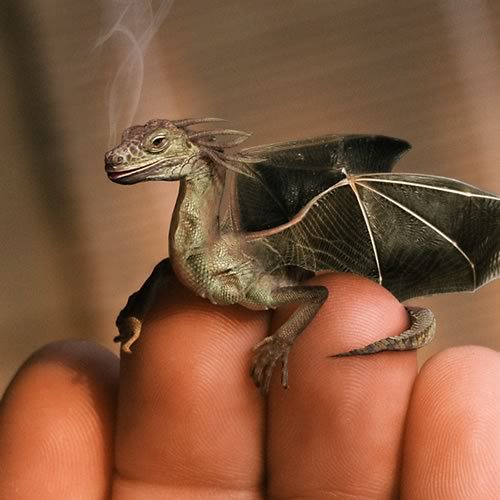
But it's so cute...

The spell of the dragon’s breath was broken and the people marveled at how Saint Paul could control the huge beast with only a tug at the golden rope. Right away the dragon began to shrink and it continued until it was back to the size it was when it first arrived at the banks of the Potomac, so long ago.
But now the story turns, because its fullness has yet to be told. You see, some people like the small dragon and see it as harmless, while others can’t remember what happened in the days that their minds were fogged by the dragon’s spell. Some see the utility of the dragon and would seek to use it for good. All the while a small radical few cry out for the beast to be killed! But no one pays much attention to them anymore. After all, one look at this little dragon and you can see it’s no longer dangerous.
But all the time, Saint Paul grows older and older. Someday his hand will slip and the beast will slither his neck free of the golden rope…

I first learned of Ron Paul in the summer of 1988. Earlier that year I had been a stand-in delegate to the California Republican Convention and in frustration of the direction the party was headed I had torn up my membership card and thrown it in the trash. Although I had been involved with libertarian causes a decade earlier, I had naively been convinced by the Reagan hype that our best chance at liberty was through the Republicans. When a more radical libertarian friend told me about Ron Paul I thought the news was too good to believe. A gentle doctor, a quiet intellectual had been given the Libertarian Party’s nomination. I learned everything I could about this humble man and was please to vote for him in the fall election of 1988. My friends and family told me I was “throwing away” my vote. I responded that I had thrown away my vote for 8 years when I supported the Reagan Revolution. Now at last, I could vote without compromise.

Lately I’ve been asked if I support Ron Paul for the office of president of the United States in the election of 2012. I do and I do not.

Assuming Ron Paul can win the Republican nomination, lets examine some possible directions the future could take, and then we can judge for good or for bad. Remember, I’m being brutally honest here so be warned, this may get rough.

Those among us who tend to lean toward conspiracy theories; can we believe the powers-that-be will allow Ron Paul to make it to a general election alive? As a child who grew up in the 1960’s I remember what the current generation has been spared. However, twenty first century America is not immune to the assassin’s cloak and dagger, although a more modern method may be employed than the crude killers that punctuated my childhood memories. So then, can I support this gentle doctor if I know my support pushes him to a martyr’s finish? Before I answer, let me add a thought or two.
If this unthinkable evil were to befall us, how would the liberty movement react?
There are two possible answers to that question. They can react peacefully in respect for a peaceful man. Or they could react with violence and add a worse tragedy to an already bad situation. In the case of a violent reaction, the State would be empowered like never before and America would see more totalitarianism than can be imagined. This is because the State knows exactly how to respond to violence, as the State is the very pinnacle of violence.

But!
What if the paranoia is unnecessary?
What if Ron Paul could go all the way to the general election?
What if the people of America stood up for liberty and Ron Paul won the election of 2012?
What if Ron Paul could wrap the rope of gold around the throat of the Beast and bring it into submission?
What if markets were set free of the burden of the State?
Peace would win the day and the path of prosperity would be beneath our feet once again!
The most selfish desires within me dream of this future. That I could live to see such a day would almost be more than I dare ask for. However, it is in pure selfishness that I dream of this future because I know that what this future actually brings is a delay of the inevitable.

The Beast I speak of so often is larger than this one dragon on the Potomac. It’s older than the oldest nation and more evil than a single human mind can comprehend. It was birthed deep in the soul of mankind in the misty distance beyond Avalon and Eden. It has risen and it has fallen and it has risen yet again, and it will continue to do so until it reaches its fullness. One man or one generation of man can only delay the inevitable maturity of this Beast, but until humankind can behold the hideous Monster in its adult form humans will never completely reject the State as their god.

So.
Is Ron Paul the best choice for president of the United States of America in 2012?
Yes!
Would I be thrilled to see Ron Paul elected as president?
Yes!
But I’m a selfish old man.
For humanity’s sake, Ron Paul serves us better by speaking and writing than by holding the leash of the Beast that will devour some future generation.

Ben Stone Ben
2011

Posted in Audio Articles, Bad Quaker Theology, Economics, Free Society, History | Tagged , , , , , , , , , , , , , , , , , , , , , , , , , , | Comments Off on 0065 Saint Paul and the Dragon

0064 Interview 004 With Grenades!?

Interview #4 With Grenades!?
(audio at bottom of article)

An exclusive interview with Grenades!? in their studio! All about the band and their music, plus two of their songs.

Measure For Measure  <~~Right-click/save-as to download this song

Out Of Sorts  <~~Right-click/save-as to download this song

Check out Grenades!? on FaceBook!

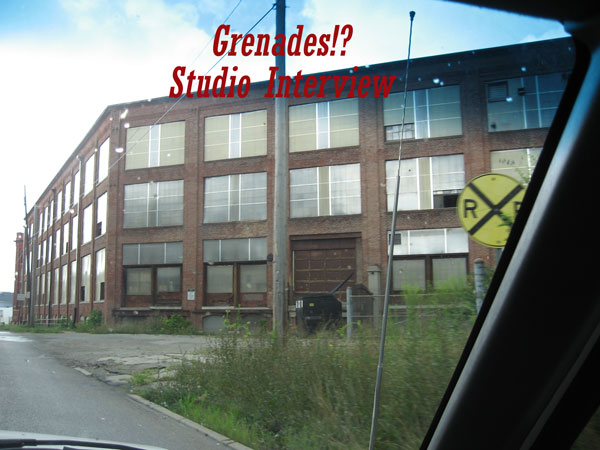
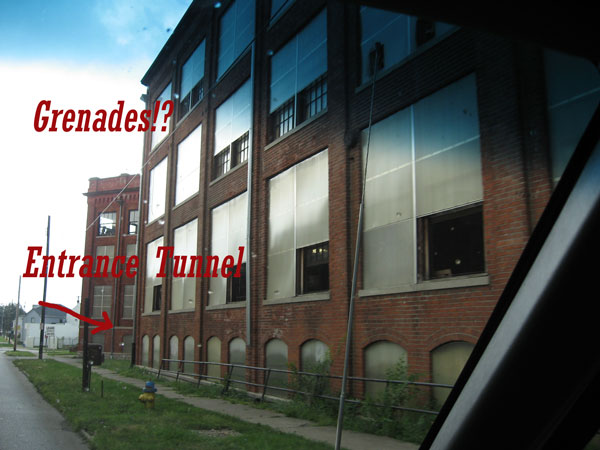
Photos of the old Huffy Bicycle factory where the Grenades!? studio is located. (click to enlarge)

The approach:
The entry:
The Tunnel:
The Courtyard of Grenades!?

0064 Interview 004 With Grenades

Posted in All Podcasts, Bad Quaker Fun, The Campfire | Tagged , , , , , , , , , , , , | Comments Off on 0064 Interview 004 With Grenades!?

0063 PC18 Robert Anton Wilson and Celine’s Laws

Episode 18 Bad Quaker Podcast
with Ben and Ki

Featured in this episode:

Original Intro/Exit music by Grenades?!

0063 PC18 Robert Anton Wilson and Celine’s Laws

Posted in All Podcasts, Free Society, Voluntaryism and Competitive Government, Voluntaryism and Social Interactions, Voluntaryism and the Zero Aggression Principle | Tagged , , , , , , , , , , , , | Comments Off on 0063 PC18 Robert Anton Wilson and Celine’s Laws